
A Field Guide to Enterprise IT
A naturalist's guide to the species you meet in enterprise IT. You'll probably recognise a few colleagues, and maybe yourself.
 by Phillip Büchler
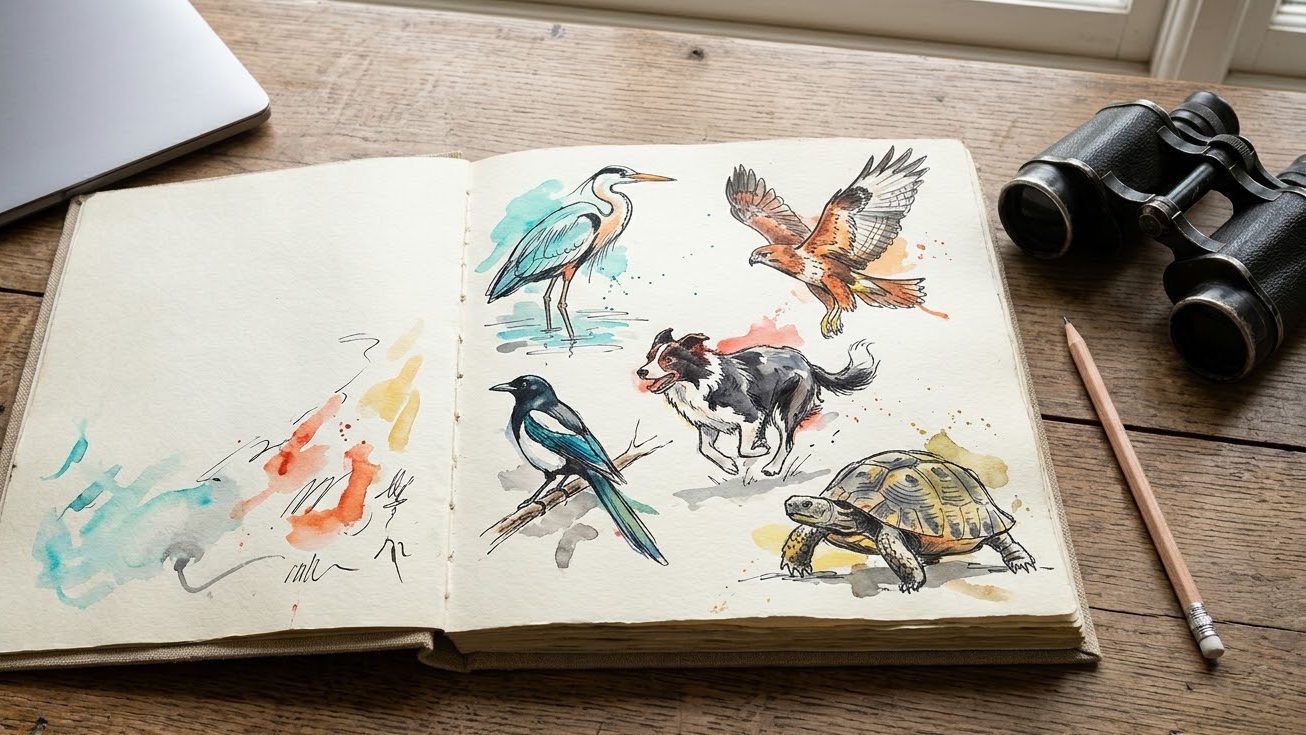
Enterprise IT is a remarkably resilient ecosystem. It has survived mainframes, outsourcing, the cloud and at least two attempts to transform transformation itself.
Its inhabitants are just as adaptable. The same person can be a visionary in the strategy workshop at nine, a sceptic in the architecture board at eleven, and very confident after lunch about why the decision has to wait until Q2.
What follows is a guide to the most common species. Think of them as costumes rather than personality types, since most of us wear several, depending on the room. You’ll probably recognise a few colleagues. If you don’t recognise yourself anywhere, read it again.
The Roadmap Herder
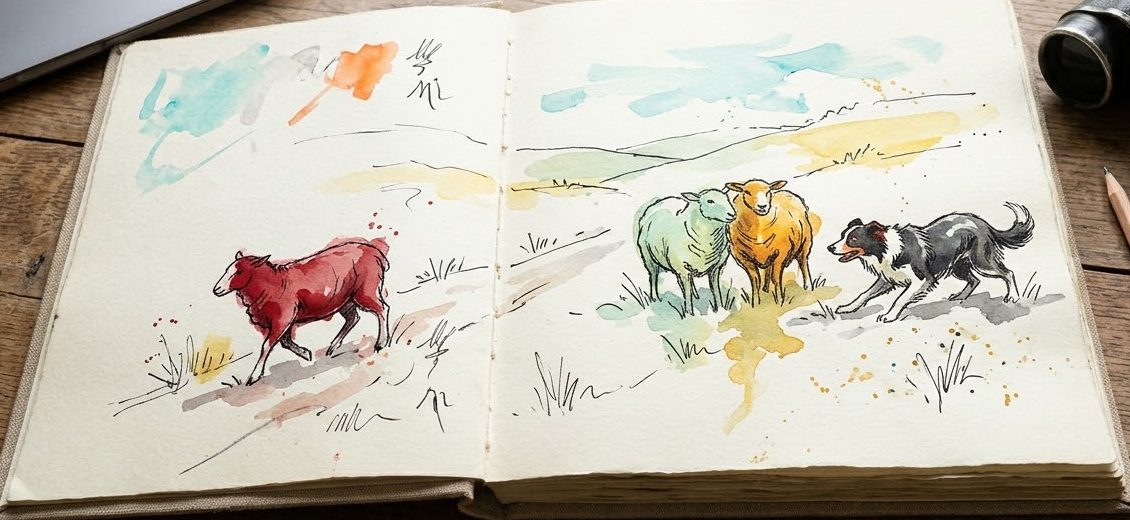
| Species card | Roadmap Herder |
|---|---|
| Latin name | Gantticus perpetuus |
| Field marks | A status slide in three colours, a dependency map nobody can read at normal zoom |
| Call | “It’s amber, but trending green.” |
| Conservation status | Thriving. Every reorganisation creates new habitat. |
The Herder looks after the roadmaps, which migrate once a year towards the next planning cycle. You can read its mood from the colours. Green means everything is going to plan. Amber means everything is going to plan, provided several other things go to plan. Red means the roadmap has met reality, and the Herder is already working on a recovery roadmap.
A mature roadmap has many dependencies on platforms, procurement, funding and other roadmaps. It’s not unusual to find one that depends on a decision that depends on a strategy that depends on the roadmap itself. The Herder doesn’t see a problem here. The system is stable, and it fits on one slide.
Ask the Herder what will actually be different once everything is delivered, and it retreats into workstreams.
The Wetland Keeper
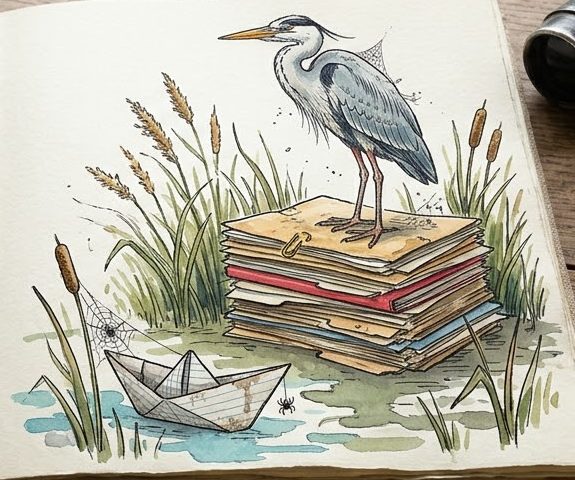
| Species card | Wetland Keeper |
|---|---|
| Latin name | Ardea deferens |
| Field marks | A risk register with more rows than the project plan, “v3.2 FINAL” in every file name |
| Call | “Have we thought about data residency?” |
| Conservation status | Protected, under its own policy |
The Keeper guards the Wetlands, where the ecosystem keeps its security concerns, compliance requirements, data residency questions and resilience assessments. These hazards are real. Most of them exist because somebody once ignored them, and the Keeper still remembers the incident report.
Trouble starts when a small experiment wades in. It’s asked for more documentation, which raises questions, which need alignment, which needs a governance forum. Two years later the experiment has grown into a programme. Nobody rejected it, and nobody approved it either. The Keeper didn’t move the whole time. Like any good heron, it can stand perfectly still for several quarters.
You want a Keeper in the room when nobody else is asking about recovery procedures or who owns the thing at three in the morning. It gets harder when naming a risk starts to count as managing it.
The Strategic Predator
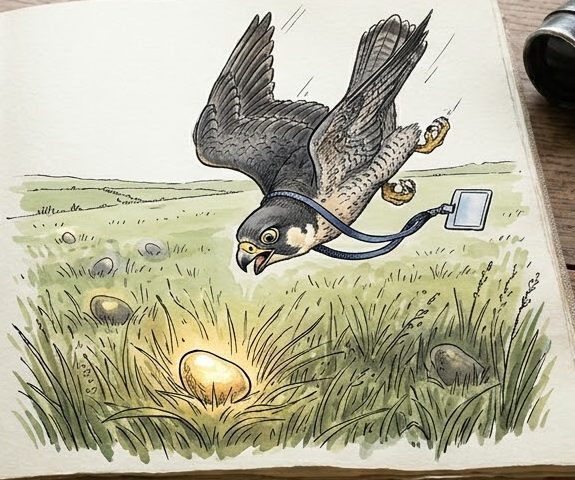
| Species card | Strategic Predator |
|---|---|
| Latin name | Accipiter hypeocolus |
| Field marks | Fresh conference lanyard, a deck with “reimagined” in the title |
| Call | “What’s our AI story?” Older recordings: “What’s our blockchain story?” |
| Conservation status | Migratory. Follows the hype cycle south every winter. |
The Predator spots a trend from great distance and goes for it before anyone has asked what it’s for. It isn’t stupid. Most of what it hunts turns out to be useful eventually. It just doesn’t stay long enough to find out. Once the press release is out and the proof of concept has a Teams channel, it moves on, leaving behind a strategy document, a pilot nobody owns and a licence that renews quietly every March.
It does best where being early is rewarded more reliably than being useful. A few months later it calls the previous trend “a good learning experience”, usually in the same meeting where it asks why there are so many unfinished initiatives.
The Graveyard Warden

| Species card | Graveyard Warden |
|---|---|
| Latin name | Testudo perennis |
| Field marks | Admin rights on a server whose hostname ends in “-old-2”, a maintenance contract renewed “for one more year” since 2019 |
| Call | “We can’t switch it off. Finance runs a report on it every January.” |
| Conservation status | Not evaluated. Nobody dares to look. |
The Warden looks after the Transformation Graveyard: retired target architectures, abandoned portals, half-finished migrations, and tools still licensed because nobody found the time to cancel them. Some died when priorities changed, some in a reorganisation. A few reached their stated objectives and were declared a success, while the original problem carried on untouched.
The Warden’s speciality is the ones that aren’t quite dead. They still get patches, budget and the occasional executive sponsor. In the strategy they appear as capabilities, in the architecture diagrams as assumptions. Retiring one would be a risk, and it would also need a decision, so the Warden keeps them comfortable. It’s slow, but it has outlasted most of its predators and several of its CIOs.
The headstones say “foundational” and “high ROI”. The weather has worn them smooth.
The Pre-Sales Architect
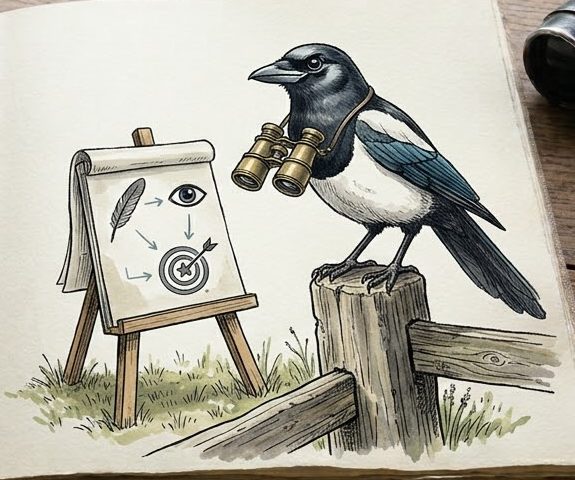
| Species card | Pre-Sales Architect |
|---|---|
| Latin name | Architectus persuadens |
| Field marks | A reference architecture that fits every customer, a laptop covered in partner-event stickers |
| Call | “Let’s do a quick workshop.” |
| Conservation status | Endemic to other people’s habitats |
The Pre-Sales Architect isn’t native to any habitat, but you’ll see it in all of them, usually carrying a deck. It speaks fluent Herder, can calm a Keeper with the right compliance mapping, and brings the Predator exactly the trend it was hoping for. It rarely stays long enough to meet the Warden, who will inherit whatever it helped to sell.
Quick identification key
For use in the field, ideally during a steering committee.
| If you observe… | You’re probably looking at |
|---|---|
| A calendar invite titled “Quick alignment”, 60 minutes, 14 attendees | Roadmap Herder |
| A reply to a two-line proposal with a twelve-question template attached | Wetland Keeper |
| The word “agentic” before the first coffee | Strategic Predator |
| The only person who knows why that one server can’t be rebooted | Graveyard Warden |
| An offer of a free workshop | Pre-Sales Architect |
| All of the above in the same meeting | A normal Tuesday |
Where do you fit?
The species also feed on each other. The Predator brings home a pilot. The Herder gives it a work stream and a colour, the Keeper takes it into the Wetlands for a review, and three years later the Warden adopts it, together with a licence that renews every March.1 Nothing in this ecosystem goes to waste. In nature, that’s called a closed nutrient cycle. In IT, it’s called the run budget.
If you recognised three colleagues while reading, you’re probably right. If you recognised yourself, that’s a healthy sign, and a rare one. Self-awareness is the rarest species in this habitat, and nobody has spotted one in a steering committee yet.
Most of us turn into a Predator when a new technology appears, a Keeper when somebody wants to change our platform, and a Herder the moment anyone asks for a delivery date. If you recognised your manager, forward this post with care, ideally through the proper governance forum.
This naturalist has observed the habitat for several years and still hasn’t found a reliable exit. That may have something to do with being on its payroll.
The Pre-Sales Architect sells the binoculars. ↩︎